Blog

The Vinyl Records: Arlo Guthrie/Pete Seeger, Precious Friend

Artist: Arlo Guthrie and Pete Seeger, with Shenandoah
Album: Precious Friend
Label: Warner Bros. Records, Inc.
Year: ca. 1982
Cat.: 2BSK 3644

Back when I was a young lad of… I’d say around 8… I had two tapes that I listened to on stay-home-sick days. At least, I remember it happening as a regular thing (as in, as regularly as I was home sick). The first tape was the soundtrack to Local Hero, which I have to say is a really good album by Mark Knopfler (and a great movie in general). The second was a dubbed version of Pete Seeger and Arlo Guthrie singing together in some kind of concert setting.

This album, titled Precious Friend, was evocative to my young impressionable imagination. When Guthrie invites the crowd to join him on stage and everyone cheers, I imagine them all getting up and actually fitting under the tent. Or whatever sort of stage set-up is involved in this concert. When Seeger sings about compost (“In dead earnest”) my mind was blown. In fact, I might trace my current job as an organic agronomist to that song’s lyrics. Guthrie’s ruminations on the “un-neutron bomb” were hilarious in a vaguely pre-pubescent sort of way.

So, to my surprise a copy of this double LP appeared at my local record store and I snapped it up right away. Took a listen to it this morning, and here is what I have to report:

  1. Arlo Guthrie is better when he’s yakking between tunes than when he’s actually playing the songs – especially when it’s a sort of rag-timey kind of instrumental number using an electrical honkey-tonk piano.
  2. Pete Seeger can just about do no wrong.
  3. Old Time Religion is a funny song when it’s about all the “old time religions” other than the one we all think of when it comes to Spiritual music.

The thing has stood up to the test of time. I enjoyed it now as much (I think) as I enjoyed it as a child. Good job Arlo and Pete!

(Thanks Billboard.com!)

The Vinyl Records: Philippe Lapointe, Transcription

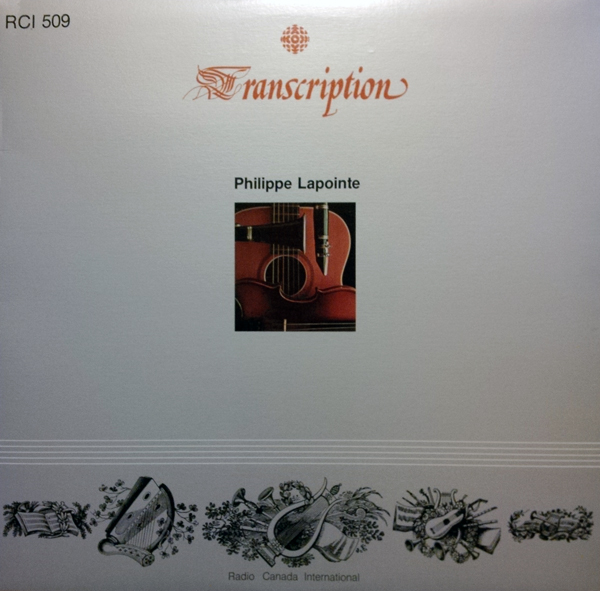
Lapointe Front

Artist: Philippe Lapointe
AlbumTranscription
Label: Radio Canada International
Year: ca. 1980
Cat.: RCI 509

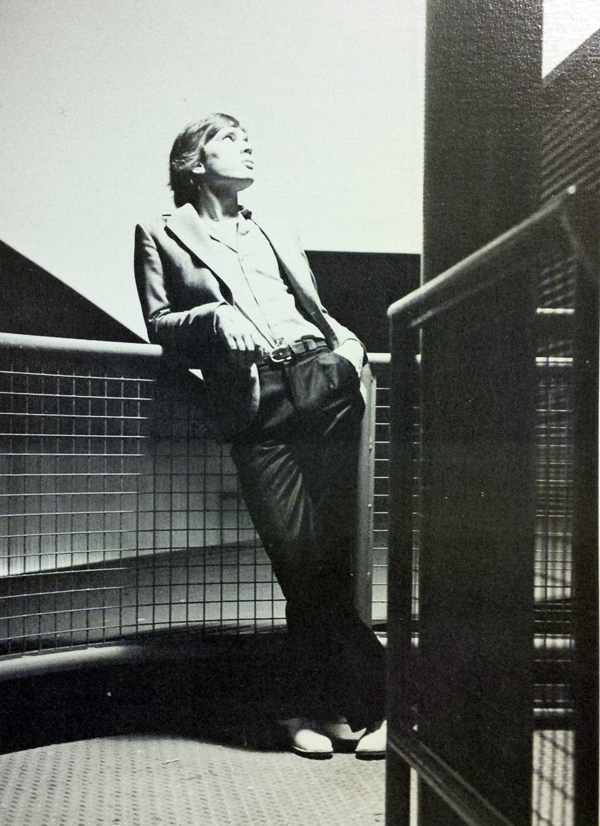
I bought this album in downtown Ottawa from the tiny classical music section of a hip record store. I bought it mostly because I’m always interested in obscure corners of Canadian music, and because the artist portrait on the back jacket was awesome.

Lapointe Back

Anyway, it turns out that this album is a little piece of behind-the-scenes radio magic, not intended for public consumption. The CBC has apparently maintained their own internal catalogue of “library music“, producing albums for use on CBC productions. These albums are released under the series title Transcriptions. Philippe Lapointe is a jazz man – at the time he recorded this record (his first) he was living in Vancouver and playing “a form of jazz with a richness and power that is inviting” (from the liner notes). What does this kind of jazz sound like? The very first track, “Hay Fever” is definitely busy and even frenetic. Synthesizers, saxophones, and electric piano dominate. Not much of a fan. I can say that my taste in jazz leans towards the more relaxed, and this song and the others that make up the A-side are not really that relaxed.

It’s on the B-side that things enter a more interesting territory. On our first listen, J. remarked that the music sounded like the soundtrack to a 1980s cop show. That wouldn’t be much of a stretch, since CBC-produced cop shows in that decade would have had access to this album for their production. Perhaps we have heard this music on TV without realizing it? This side is definitely more atmospheric, less dynamic, and easier (for me) to listen to. There are elements of Eno and Biosphere. Maybe even some elements of Sting’s “Englishman in New York” (you know that end part when things kind of mellow out and drift into the ether of your mind). I would say the highlight track from the second side is “Touak”, a song that hangs out in a very spacey zone with contrapuntal sliding synths, moaning fretless bass accents, and very little percussion (mostly a bass drum heartbeat keeping a slightly nervous tempo in keeping with the cop show aesthetic). I particularly enjoy the opening, as the instruments gradually stumble into their groove as though they were still finding their seats when the studio engineer pressed “Record.”

I can’t find a recording of Touak online for you to listen to. So for your listening pleasure I present to you the only track from this album that has been uploaded by anyone so far, “Hay Fever”: http://youtu.be/zTP3ICnm7O8
The Vinyl Records

I’ve been “collecting” LPs for many years now. In the early years it was the occasional novelty record from a thrift store. At the time I was living at home with the folks and would play these records on my parent’s turntable. Albums like the soundtrack to FM entered my collection during this time. I was also listening to music my parents had on the shelf – Bruce Cockburn’s Night Vision and Michael Hedges’ Watching my life go by come to mind.

In college I made new friends with turntables of their own, and a similar interest in wacky and not-very-good classic rock and polka bands. The Alarm’s Strength dates from this era. So, probably, does that Boston album the name of which I can never remember because it’s the one that doesn’t really have any of their “good” songs on it.

Over the subsequent years I continued to pick up records here and there. My blushing bride brought with her a box or two of LPs that she had amassed, including some great finds from the School of Music’s library sale. I think Smetena’s Moldau was in one of those boxes. Unfortunately, the turntable we brought with us to Toronto at that time was a bit finicky in ways that involved spastic jerks of the arm across the records without warning. My attempts to fix it only made it stop working completely.

Occasionally we’ve adopted entire collections at once. My grandparents’ LPs came to us when they sold their record player (Praise Strings I-III), and an aunt and uncle donated a box of Folkways and other original roots music records (I believe these were given to us the same weekend that I competed in the World Crokinole Championships in Tavistock, ON – another story for another time).

It was about three years ago that we picked up a new and improved turntable, and now we’ve been putting the shoulder to the plow to pick up music that is enjoyable to listen to on a good hi fi system. The challenge is that our LP record shelves (4 wooden crates) are overflowing, and I have to be very selective in my acquisitions.

Looking at these four boxes of records, it struck me that there are a number of albums that I don’t think I’ve ever heard. And there are probably many more that I have heard but completely forgotten. Why should those records take up valuable space on my shelf if they don’t contribute to our sonic ecology? Ditch the duds and free up the space, Simon. But I can’t get rid of any record until I’ve listened at least once. And every record will have to defend its musical (or other) value to remain on the shelf.

So I have started this series of reviews of the records in our collection, and titled the series The Vinyl Record. I hope you enjoy. I’m going to post this little essay and then start my review of Philippe Lapoint’s Transcription.